Maximizing Efficiency: A Step-by-Step Guide to Using a Virtual Assistant
- Virtual Assistant
- Business Productivity
- Remote Work
- Delegation
- Time Management
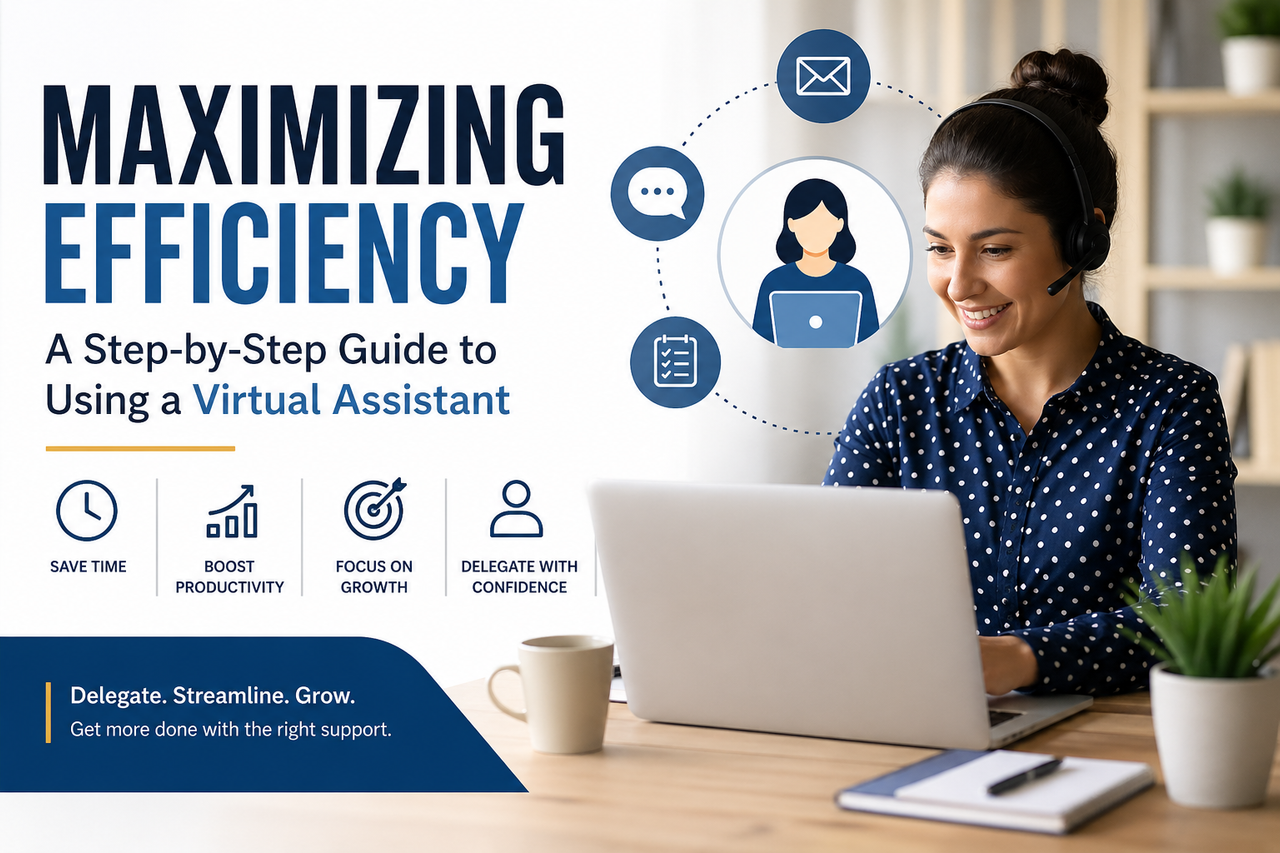
Learn how to integrate a virtual assistant into your business with our step-by-step guide. Discover tips for delegation, common mistakes to avoid, and real-world scenarios to maximize efficiency.
In today’s fast-paced business world, small and mid-sized business owners often find themselves overwhelmed with administrative tasks that eat into productivity. Virtual assistants (VAs) offer a flexible solution—freeing up your time so you can focus on growth and strategic initiatives.
But how do you actually use a VA effectively?
This guide walks you through the key steps to successfully integrate a VA into your operations.
Step 1: Identify Tasks to Delegate
What to Do
Start by identifying tasks that consume your time but don’t require your direct involvement. These often include:
- Email management
- Scheduling
- Customer follow-ups
- Data entry
- Social media posting
Why It Matters
Delegating these tasks can free up 10–15 hours per week. Many business owners spend 1–2 hours daily on work that a VA could handle—contributing to nearly 40% of time spent on administrative duties.
Practical Tip
List your daily tasks and categorize them into:
- Must Do Myself
- Can Be Delegated
For example, if you spend up to 2 hours managing emails, a VA can take over and streamline your inbox.
Step 2: Choose the Right VA
What to Do
Select a VA whose skills align with your business needs. Rates typically range from $15–$35 per hour, depending on experience and specialization.
Why It Matters
Hiring the right VA ensures tasks are completed efficiently and with minimal supervision. A poor fit can lead to delays, frustration, and wasted resources.
Practical Tip
Interview at least three candidates and request work samples. If hiring for social media, ask for examples of campaigns they’ve managed.
Step 3: Set Clear Instructions and Expectations
What to Do
Provide clear, detailed instructions from the beginning, including:
- Deadlines
- Communication preferences
- Quality standards
Why It Matters
Most delegation issues stem from unclear instructions—not lack of ability. Clear guidance allows your VA to work independently and confidently.
Practical Tip
Use tools like Asana or Trello to manage tasks. When assigning work (e.g., customer follow-ups), provide templates or scripts to ensure consistency.
Step 4: Start with a Trial Period
What to Do
Begin with a 2–4 week trial period to evaluate performance and compatibility.
Why It Matters
This adjustment phase helps refine workflows and communication. Performance typically improves after this period.
Practical Tip
Set measurable goals, such as:
- Reducing email response time by 50%
- Increasing social media engagement by 20%
Step 5: Review Performance and Provide Feedback
What to Do
Conduct regular performance reviews and provide constructive feedback.
Why It Matters
Ongoing feedback ensures consistent quality and keeps your VA aligned with your goals.
Practical Tip
Schedule weekly check-ins to review progress, address challenges, and adjust priorities.
Common Mistakes to Avoid
- Overloading the VA
- Start small and gradually increase workload.
- Poor Communication
- Use tools like Slack to maintain clear and consistent communication.
- Not Building Rapport
- Treat your VA as part of your team to foster trust and long-term collaboration.
What This Looks Like in the Real World
Imagine a small marketing consultancy where the owner, Sarah, works 60 hours a week—40% of which is spent on administrative tasks.
By hiring a VA for 15 hours per week, she delegates:
- Email management
- Appointment scheduling
- Client follow-ups
This saves her 10 hours weekly and allows her to focus on acquiring new clients. Within a month, she increases her VA’s hours to 25 per week—resulting in even greater efficiency and business growth.
FAQ
1. How do I know if I need a VA?
If routine tasks are taking time away from core business activities, it’s time to consider hiring a VA.
2. How do I ensure my VA is productive?
Set clear expectations, provide the right tools, and maintain regular communication.
3. What if my VA isn’t meeting expectations?
Address issues early with clear feedback. If performance doesn’t improve, consider finding a better fit.
4. Can a VA handle sensitive information?
Yes—just ensure confidentiality agreements are in place and use secure systems.
5. How do I measure ROI?
Track time saved, productivity gains, and business growth, then compare against the cost of hiring your VA.
Conclusion
Integrating a virtual assistant into your business can significantly improve efficiency and free up your time for higher-value work.
By identifying the right tasks, hiring the right person, and setting clear systems in place, you can maximize the value of a VA and scale your business more effectively.
Start small, stay consistent, and build from there.