The Cost-Effectiveness of Hiring Virtual Assistants vs. Full-Time Employees
- virtual assistants
- cost-effectiveness
- business growth
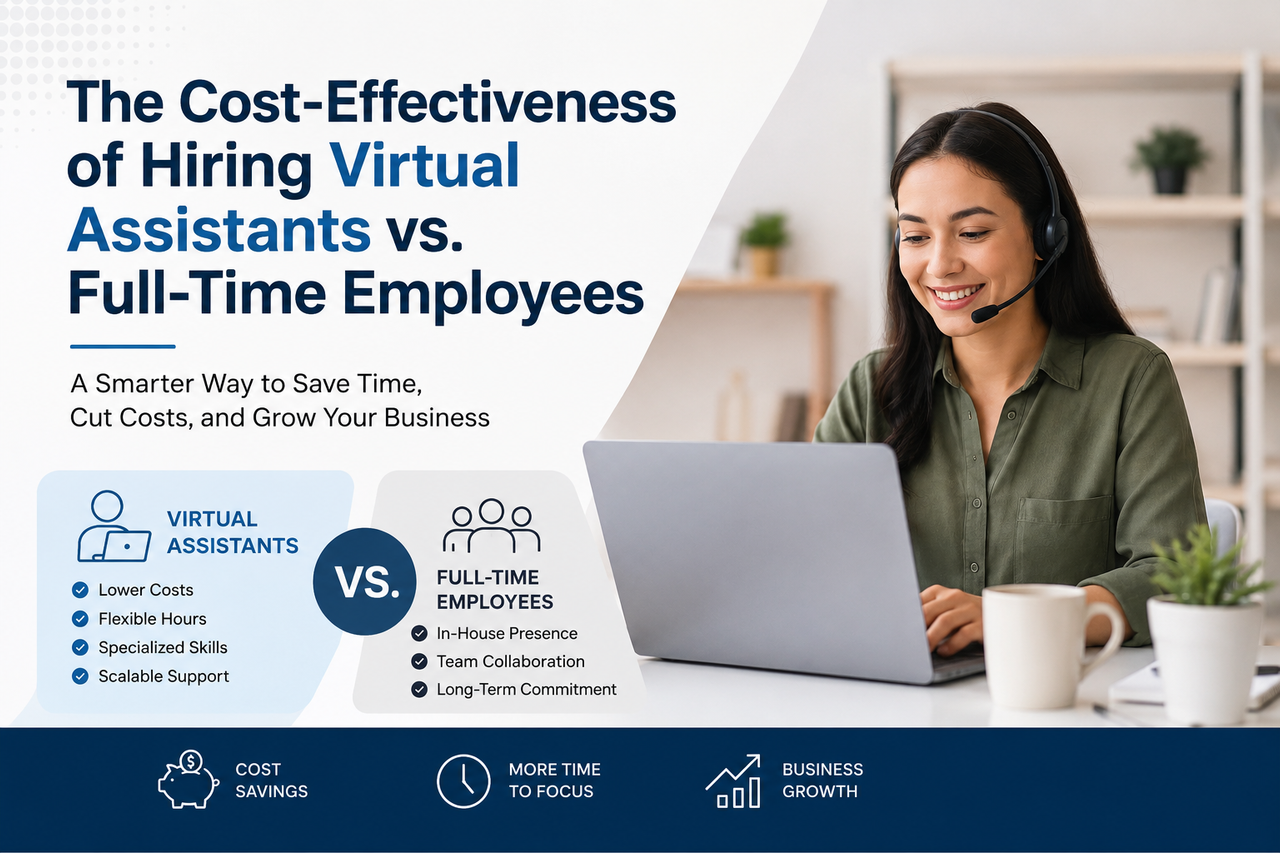
Explore the cost-effectiveness of hiring virtual assistants versus full-time employees, featuring a detailed side-by-side comparison to guide your decision.
Virtual Assistant or Full-Time Employee: Which Is the Smarter Investment?
As a business owner, every hiring decision impacts your company's growth, productivity, and bottom line. One of the most common questions growing businesses ask is:
Should I hire a virtual assistant or bring on a full-time employee?
The answer depends on your business goals, workload, and budget. While full-time employees remain essential for many roles, virtual assistants (VAs) have become a practical and cost-effective solution for businesses looking to grow without significantly increasing overhead.
At Covenant VA, we've helped businesses across various industries find skilled virtual assistants who save time, reduce costs, and allow owners to focus on growing their companies. In this guide, we'll compare virtual assistants and full-time employees so you can determine which option is the best fit for your business.
Virtual Assistants vs. Full-Time Employees: A Quick Comparison
Both hiring options offer unique advantages. The right choice depends on the responsibilities you need to fill.
Virtual Assistants are ideal if you need:
- Administrative support
- Customer service
- Appointment scheduling
- Email and calendar management
- Data entry
- Social media management
- Marketing assistance
- Flexible working hours
- Scalable support without long-term commitment
Full-Time Employees are ideal if you need:
- In-office collaboration
- Leadership roles
- Daily supervision
- Hands-on operational work
- Long-term responsibilities requiring deep company knowledge
The Advantages of Hiring a Virtual Assistant
Lower Operating Costs
One of the biggest reasons businesses hire virtual assistants is affordability.
Instead of paying a full salary plus benefits, payroll taxes, office space, equipment, and insurance, businesses only pay for the hours they actually need.
Many companies begin with just 10 to 20 hours per week and increase support as their business grows.
Greater Flexibility
Business needs change throughout the year.
Virtual assistants allow you to increase or reduce hours depending on workload, making them an excellent option for seasonal businesses or companies experiencing rapid growth.
Access to Specialized Skills
Modern virtual assistants do much more than administrative work.
Depending on your needs, a VA can assist with:
- Customer support
- CRM management
- Social media
- Lead generation
- Bookkeeping
- Project coordination
- Graphic design
- Marketing support
- Executive assistance
Rather than hiring multiple employees, businesses can access specialized talent only when needed.
More Time for High-Value Work
Many business owners spend hours each week answering emails, scheduling meetings, updating spreadsheets, and handling repetitive tasks.
Delegating these responsibilities to a virtual assistant often allows owners to recover 10–15 hours each week, giving them more time to focus on sales, strategy, customer relationships, and business development.
Potential Challenges of Hiring a Virtual Assistant
While VAs provide tremendous value, there are a few considerations.
Initial Onboarding
Like any new team member, virtual assistants require training.
The first couple of weeks are typically spent learning your workflows, communication style, and business processes. Once systems are in place, productivity usually increases quickly.
Remote Communication
Because virtual assistants work remotely, businesses should establish clear communication channels and use project management tools to ensure smooth collaboration.
Fortunately, platforms like Slack, Microsoft Teams, ClickUp, Trello, and Asana make remote teamwork easier than ever.
The Advantages of Hiring a Full-Time Employee
Full-time employees continue to play an important role in growing businesses.
Strong Company Integration
Employees become deeply familiar with your company's culture, systems, and long-term objectives, making them valuable for roles that require ongoing involvement.
Easier In-Person Collaboration
For businesses that rely on face-to-face meetings, hands-on operations, or daily team interaction, having employees on-site can improve communication and teamwork.
The Costs of Hiring a Full-Time Employee
Hiring a full-time employee involves more than paying a salary.
Additional expenses often include:
- Employee benefits
- Payroll taxes
- Health insurance
- Paid leave
- Office space
- Equipment
- Software licenses
- Training costs
In many cases, the actual cost of employing someone is 25% to 40% higher than their base salary.
For example, an employee earning $50,000 annually may cost the business $62,500 to $70,000 or more once overhead is included.
For smaller businesses, these additional expenses can significantly impact cash flow.
Cost Comparison
| Hiring OptionTypical CostBest For | ||
| Virtual Assistant | Approximately $15–$35 per hour | Flexible support, administrative work, marketing, customer service, and specialized projects |
| Full-Time Employee | Annual salary plus 25–40% additional overhead | Long-term, in-house roles requiring daily collaboration and direct supervision |
For many small and medium-sized businesses, hiring a virtual assistant provides excellent value while keeping operating costs under control.
Real-World Examples
E-commerce Business
A growing online retailer initially hired a virtual assistant for 15 hours per week to manage customer inquiries and inventory updates.
As order volume increased, the business expanded the VA's schedule to 35 hours per week, maintaining excellent customer service without immediately hiring another full-time employee.
Consulting Firm
A consulting business brought on a VA for 10 hours each week to handle scheduling, document preparation, and administrative tasks.
The owner regained over 10 hours every week, allowing more time to focus on networking and acquiring new clients.
As the business expanded, they hired an in-house employee for client-facing responsibilities while continuing to rely on their virtual assistant for administrative support.
What Success Can Look Like
Imagine a small marketing agency with five employees.
The owner spends nearly 20 hours every week handling emails, scheduling meetings, invoicing, and administrative work.
By hiring a virtual assistant for 15 hours per week, the agency significantly reduced administrative workload while spending far less than it would on a full-time hire.
With more time available for strategy, client meetings, and business development, the agency experienced substantial revenue growth within just a few months.
Frequently Asked Questions
What tasks should I delegate to a virtual assistant?
Start with repetitive, time-consuming tasks that don't require your direct involvement, such as email management, calendar scheduling, customer support, CRM updates, data entry, and social media management.
How does the onboarding process work?
At Covenant VA, we carefully match each client with a virtual assistant based on their business needs. We guide both parties through onboarding, establish communication processes, and help ensure a smooth transition.
Can a virtual assistant become a full-time employee later?
Absolutely. Many businesses begin with part-time virtual assistance and gradually increase hours as demand grows. Some eventually transition their virtual assistant into a full-time role.
Which industries benefit the most from virtual assistants?
Virtual assistants are valuable across many industries, including:
- Real Estate
- Marketing Agencies
- Healthcare
- Construction
- Legal Services
- E-commerce
- Technology
- Professional Services
Any business with recurring administrative or operational tasks can benefit from virtual support.
What if the virtual assistant isn't the right fit?
Finding the right match is important. Covenant VA works closely with clients throughout the onboarding process and offers replacement options if necessary, helping ensure long-term success.
Final Thoughts
Hiring isn't simply about filling a position—it's about making the best investment for your business.
If your goal is to reduce overhead, improve productivity, and gain flexible support, a virtual assistant can deliver exceptional value while allowing you to scale at your own pace.
If your business requires hands-on collaboration, daily supervision, or specialized in-house responsibilities, hiring a full-time employee may be the better long-term solution.
Many successful businesses discover that the ideal approach is a combination of both: full-time employees handling core operations while virtual assistants manage administrative, marketing, and support tasks.
At Covenant VA, we help businesses build reliable remote support teams that save time, reduce costs, and create more opportunities for growth. Whether you're hiring your first virtual assistant or expanding your team, we're here to help you find the right talent for your business.